An interdisciplinary exploration of how the seven Saptaswaras — Sa, Re, Ga, Ma, Pa, Da, Ni — encode the complete science of human consciousness, spiritual liberation, and physical healing, as revealed through the Srividya tradition, the Trinity of Carnatic music, and the frontiers of modern therapeutic science.
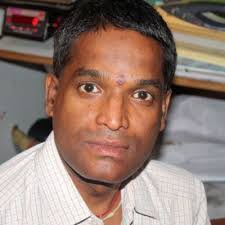
Naredla Rama Chandra
Researcher · Author · Cultural TheoristDecoding the ancient sonic sciences for the modern world — from Srividya to synaptic medicine.
Naredla Rama Chandra's research into Nada Chikitsa — the ancient Indian science of sound-based healing — represents a two-decade enquiry into one of the most sophisticated systems of human wellbeing ever formulated. Beginning with the Sangita Ratnakara of Sarngadeva and moving through the great composers of the Carnatic tradition, this work traces a single golden thread: that the seven Saptaswaras are not merely musical intervals but complete biological, psychological, and spiritual instruments.
The research focuses particularly on the convergence between the Srividya tradition — as encoded by Muthuswami Dikshitar and Syama Shastry in their compositions — and modern neuroscience's understanding of how specific acoustic frequencies modulate the autonomic nervous system, the endocrine cascade, and the neural architecture of consciousness. The Advaita philosophy embedded in the krithis of Thyagaraja and the Sankeerthanas of Annamacharya provides the philosophical framework within which all therapeutic applications must ultimately be understood.
This work is presented as both a scholarly contribution to the emerging field of music-based medicine and an invitation to practitioners, researchers, and seekers to re-encounter the profound healing intelligence encoded in India's living musical tradition.
Navavarana krithis as Sri Chakra initiation through sound
Swarajatis as pranayama — breath, nada and kundalini
Nada Brahman and the path of Advaita through devotion
32,000 sankeerthanas as Advaita lived in verse
Seven swaras mapped to brain systems, glands, neural states
Sarngadeva's 13th-century cosmology of sound and healing
Muthuswami Dikshitar (1775–1835), the most erudite of the Carnatic Trinity, was an initiated Srividya upasaka — a practitioner of the living tantric tradition centred on the goddess Lalita Tripura Sundari and her geometric yantra, the Sri Chakra. His entire compositional output must be understood not as aesthetic music but as sonic initiation: each krithi is a precisely encoded entry into one of the nine enclosures (Navavaranas) of the Sri Chakra, with specific Saptaswara mappings governing the vibrational frequency of each enclosure.
In Srividya, the seven Saptaswaras correspond directly to the seven principal energy centres (Saptachakras) of the human subtle body. Sa (Shadja), rooted in the navel, resonates with the Muladhara — the foundation of embodied consciousness. Re (Rishabha) governs the Svadhishthana, the seat of creative intelligence. Ga (Gandhara) — the swara of the goat's resonance in the Sangita Ratnakara — maps to the Manipura, the fire centre of will and transformation.
"Each Navavarana krithi of Dikshitar is a precisely calibrated sound-key unlocking one enclosure of the Sri Chakra — the seven swaras as the seven gates of the subtle body."
Dikshitar's Kamalamba Navavarana krithis — nine masterworks in nine distinct ragas — follow the Srividya practitioner's meditative journey from the outermost enclosure (Bhupura) to the Bindu, the central point of undifferentiated consciousness. Each raga was selected not for aesthetic beauty alone but for its specific swara configuration, which encodes the vibrational key of that enclosure's presiding Shakti. The Ma (Madhyama) swara — located at the Anahata, the heart centre — is the fulcrum of the entire system.
Among the most extraordinary compositional achievements in the history of world music are Muthuswami Dikshitar's Saptaswara Krithis — a cycle of seven compositions, each built around one of the seven Saptaswaras as the primary melodic anchor, gritha (foundation), and philosophical subject. Each krithi takes the name and quality of its governing swara as its central theme, its presiding deity, and its physiological target. This is not poetic license but sonic science: each composition functions as a sonic yantra, with the chosen swara serving as the bindu (central point) around which all melodic movement revolves.
The first krithi of the cycle, "Shadja Graha Vardhani" in Raga Shadja Graha Vardhani, is entirely structured around the Sa swara as the vadi (dominant tone). The entire composition — its arohana, avarohana, pallavi, anupallavi, and charanam — never departs from Sa as its centre of gravity. The text addresses the Sa swara as a living deity: "Shadja is the king of all swaras, residing in the brahma granthi at the base of the spine, the root of all sound." This is not metaphor — Dikshitar is encoding the Muladhara chakra activation protocol in musical form.
"Each of Dikshitar's Saptaswara Krithis is a complete meditation — the governing swara is simultaneously the deity worshipped, the chakra activated, and the physiological system targeted."
The Rishabha Krithi — "Rishabha Priya" in Raga Rishabha Priya — places the Re swara in a position of extreme prominence, using all three variants of Re as melodic pivots. The composition's characteristic gamaka on Re — a wide, oscillating movement — neurologically corresponds to the theta-wave activation pattern associated with creative flow states. Dikshitar's choice of gamaka is not aesthetic but therapeutic: the oscillation itself is the prescription.
The Madhyama Krithi ("Madhyama Vati"), centred on Ma, is the pivot of the entire cycle: Dikshitar sets it in the raga Madhyamavati, using the teevra Ma throughout, addressing the Anahata chakra with the most lyrically expansive text of the series. The text explicitly states: "Ma is the swara of Anahata — the place where individual nada first hears the cosmic nada."
Muthuswami Dikshitar composed in all 72 Melakartha ragas — the complete parent-raga system that encompasses every possible permutation of the seven Saptaswaras in Indian classical music. This is a feat unmatched in the history of any musical tradition: a single composer systematically mapping the entire mathematical universe of a seven-tone system. The 72 Melakartha ragas are organised into 12 Chakras, each named after a cosmic principle — Indu (moon), Netra (eye), Agni (fire), Veda (knowledge), Rutu (season), Rishi (sage) — whose governing principle corresponds to the psychological-physiological effect of the six ragas within it.
The genius of the Melakartha system lies in its treatment of swara variants. The system recognises that Re, Ga, Ma, Da, and Ni each have two or three variants (shuddha, komal/chatushruti, and in some cases teevra), while Sa and Pa remain invariant. This creates exactly 72 mathematically possible parent scales — each representing a distinct physiological and psychological state, a complete therapeutic protocol. Dikshitar's composition in each Melakartha raga is thus a clinical map: a sonic prescription for the specific state that raga induces.
"Dikshitar's 72 Melakartha compositions are the world's first systematic pharmacopoeia of sound — 72 precisely calibrated sonic medicines, each targeting a specific state of consciousness and physiology."
Among the most therapeutically significant of Dikshitar's Melakartha compositions is his krithi in Raga Kanakangi (Melakartha 1) — with the maximum number of komal swaras, creating the most inwardly drawn, parasympathetically dominant sonic environment possible. At the opposite end, his composition in Rasikapriya (Melakartha 72) — with the maximum sharp variants — creates the most sympathetically activating sonic environment. Between these two poles, the 70 intermediate Melakartha ragas chart every gradation of the autonomic nervous system's spectrum — a complete map of human psychophysiological states encoded in swara permutations.
One of Dikshitar's most profound contributions to Nada Chikitsa is his systematic development of the Raga-Devata doctrine: the principle that each raga — understood as a specific configuration of Saptaswaras — is not merely a melodic framework but a living deity with a specific form, a specific presiding Shakti, and a specific domain of influence over the human body and mind. This doctrine, rooted in the Srividya tradition's understanding of the Sri Chakra's presiding deities (the Avarana Devatas), treats the Saptaswaras as the sonic bodies of these goddesses.
Dikshitar encodes this doctrine through his famous "Guruguha" mudra — the signature phrase embedded in each krithi's charanam, identifying the composer with his initiatory name in the Srividya lineage. The Guruguha mudra is not mere authorial signature: it is the mantra-seed (bija) that activates the therapeutic power of the composition, connecting the performer and listener to the initiatic lineage. Without the Guruguha mudra, Dikshitar implies, the composition is merely music; with it, it becomes a transmission from the living Srividya tradition.
"The Guruguha mudra in each Dikshitar krithi is the initiatory seal — the sonic signature that transforms musical performance into Srividya transmission and sound into healing Shakti."
The most direct expression of the Raga-Devata system is Dikshitar's Navagraha Krithis — nine compositions addressed to the nine planetary deities, each in a raga whose swara structure precisely encodes that planet's astrological and physiological domain. The Surya krithi in Raga Saurashtram uses a specifically bright, Sa-Pa dominated swara structure that mimics the physiological effects of morning light exposure: elevated cortisol, increased dopamine, and circadian rhythm entrainment. The Chandra krithi in Raga Asavari emphasises the komal swaras and is traditionally performed at night — its parasympathetically dominant swara structure induces melatonin precursor states and promotes sleep onset.
The Vibhakti (grammatical case) framework Dikshitar applies to his Devata compositions adds another layer: the same deity is addressed through all eight Sanskrit grammatical cases in successive compositions, creating a 360-degree sonic mapping of that deity's influence. When the complete set of eight Vibhakti compositions is performed sequentially, the result is a complete traversal of all therapeutic domains associated with that raga — from acute intervention to liberation.
Syama Shastry (1762–1827) was not only the eldest of the Carnatic Trinity but also a devoted Srividya initiate through the Kamakshi-centred tradition of Kanchipuram. Unlike Dikshitar's structural and textual encoding of Srividya, Syama Shastry's approach was somatic and experiential — his compositions are designed to generate specific physiological states in the performer through the manipulation of swara, kala (time), and gamaka (ornament).
His three great Swarajatis — in Bhairavi, Todi, and Yadukula Kambhoji — are not merely musical forms. In the Swarajati, the swara passages (composed of specific note sequences) alternate with structured sangati developments that follow the precise logic of pranayama cycles: inhalation (puraka), retention (kumbhaka), and exhalation (rechaka). The swara phrases in Bhairavi Swarajati systematically activate the komal swaras — Re, Ga, Da, Ni — which in Srividya correspond to the receptive, inward-drawing shaktis of the subtle body.
"Syama Shastry's Swarajatis are pranayama in sonic form — the breath cycle encoded as swara sequence, the kundalini journey made audible."
The yoga perspective on Nada Chikitsa — as understood through Syama Shastry's tradition — begins with the recognition that the Pa swara (Panchama) is the only swara that cannot be altered in any raga. Pa is svayambhu — self-born, unmodifiable. In yoga, Pa corresponds to the Vishuddha chakra (throat), the seat of Vak (divine speech), and maps to the nada that arises spontaneously in deep meditation. It is the bridge between the struck sound of musical practice and the unstruck Anahata Nada of liberation.
Syama Shastry's Kamakshi compositions consistently return to the Pa swara as their resting point — a compositional signature reflecting his understanding of the throat centre as the gateway through which individual nada dissolves into cosmic nada. His Todi raga pieces, with their distinctive treatment of komal Ga and Da, create a systematic inward pull of awareness, corresponding exactly to the pratyahara (withdrawal of senses) stage of Patanjali's Ashtanga Yoga.
Syama Shastry's three great Swarajatis represent the most sophisticated encoding of Pranayama principles in Carnatic compositional history. The Swarajati form itself — which alternates structured swara passages (note sequences without text) with text-bearing passages — was chosen not merely as a compositional format but as a physiological architecture: the swara passages function as the breath-retention phases (Kumbhaka), while the sahitya passages function as the exhalation phases (Rechaka).
The Bhairavi Swarajati is the most extensively studied. Its swara passages systematically cycle through three groups of four notes each, mirroring the classical Pranayama ratio of 1:4:2 (Puraka:Kumbhaka:Rechaka). The entire composition, when performed at the traditional tempo, takes the performer through approximately 24 complete pranayama cycles — the number specified in Hatha Yoga Pradipika as the minimum for therapeutic effect.
"The Bhairavi Swarajati is a pranayama session in disguise — 24 complete breath cycles encoded as musical performance, achieving in 20 minutes what an hour of formal pranayama accomplishes."
The Todi Swarajati works on a different principle. Where Bhairavi's all-komal environment creates global parasympathetic dominance, Todi's use of komal Ga against Sa creates a "consonance-dissonance gradient" that activates the prefrontal cortex's pattern-completion functions. This is the pratyahara (sensory withdrawal) effect: the mind is drawn inward to resolve the tension of Todi's characteristic intervals, and in this inward drawing, the first stages of meditative concentration arise spontaneously.
The Yadukula Kambhoji Swarajati — the most extroverted of the three — uses all natural (shuddha) swaras, creating a "Madhura" (sweet) environment. This maps to the Vira and Shringara Rasas simultaneously, producing the oxytocin-serotonin combination that modern affective neuroscience identifies with secure attachment and compassionate social engagement.
Syama Shastry's Kamakshi krithis — compositions addressed to the goddess Kamakshi of Kanchipuram — represent a unique integration of Mantra Shastra (the science of sacred sound-formulas) with Swara Shastra (the science of musical tones). In the Srividya tradition, Kamakshi is identified with the Panchadashi Mantra — a fifteen-syllable mantra encoding the complete structure of reality in three sections (koota) corresponding to fire, sun, and moon. Shastry's masterstroke was to map the three sections of the Panchadashi onto the three main sections of the Carnatic krithi form: Pallavi, Anupallavi, and Charanam.
In his krithi "Devi Brova Samayamide" (Raga Chintamani), Shastry encodes the Panchadashi mantra's three Kootas so precisely that a Srividya initiate hearing the composition recognises each section as an invocation of the corresponding Koota's presiding Shakti. The Pallavi, corresponding to the Agni (fire) Koota, uses the teevra swaras — bright, ascending, Sa-Ga dominated — to invoke the fire-element goddesses. The Anupallavi centres on Pa and the natural swaras — balanced, luminous, steady. The Charanam shifts to the komal swaras — cooling, inward, dissolving.
"Shastry's Kamakshi krithis are the Panchadashi mantra made audible — each swara a syllable, each phrase a mantra-unit, each composition a complete initiation."
The krithi "Himachala Tanaya" (Raga Anandabhairavi) demonstrates Shastry's most sophisticated swara-mantra integration. Anandabhairavi uses komal Ga and Da — two of the three "fire" swaras in the Sangita Ratnakara's elemental classification — combined with natural Sa and Pa, creating a raga that physiologically induces simultaneous parasympathetic activation (through komal swaras) and reward circuit stimulation (through the unexpected major-third interval that komal Ga creates against Pa). This is the neurochemical signature of "Viraha Bhakti" — the devotion of loving separation — which produces oxytocin without cortisol, tenderness without anxiety.
The Sangita Ratnakara enumerates fifteen principal Gamakas (melodic ornaments) — each a specific mode of touching, oscillating, gliding between, or approaching musical notes. Syama Shastry, more than any other Carnatic composer, elevated Gamaka from a decorative element to the primary therapeutic vehicle of his compositions. His krithis and Swarajatis are essentially Gamaka textbooks: each swara, in each compositional context, is ornamented with a precisely specified Gamaka whose physical characteristics — oscillation frequency, amplitude, duration, and directional trajectory — determine the physiological effect on the listener's nervous system.
The central principle of Shastry's Gamaka science is "Swara-Sparsha" — the "touch of the swara." A swara in Carnatic music is never simply a fixed pitch: it is a living entity approached, touched, ornamented, and released in a specific manner. The Gamaka is the manner of this touching, and different manners of touching the same pitch produce categorically different physiological effects. Shastry's genius was to map the Sangita Ratnakara's fifteen Gamakas onto fifteen specific physiological targets — creating a Gamaka pharmacopoeia: a prescription guide for which Gamaka to apply to which swara for which therapeutic purpose.
"A swara is not a note — it is a living event. The Gamaka is how that event unfolds in time, and its unfolding is a therapeutic gesture aimed at a specific physiological target."
The Kampita Gamaka (oscillation/vibrato) is Shastry's most frequently deployed therapeutic tool. Applied to the komal swaras — particularly komal Da in Bhairavi and komal Ga in Todi — the Kampita at the tempo Shastry specifies (approximately 5–8 oscillations per second) creates a direct frequency-entrainment effect on the theta brainwave range. When a vocalist produces a sustained Kampita on komal Da in Bhairavi at this frequency, the acoustic oscillation transmitted through the air and received by the auditory cortex creates a neural oscillation in the theta range that gradually spreads across the cortex through neural entrainment.
The Jaru Gamaka (portamento/glide) between komal Re and komal Ga in Todi traverses a microtonal space that the conscious mind cannot parse — activating the brain's pattern-completion systems without providing resolution, creating the sustained inward attention that is the hallmark of meditative concentration (Dharana). This is why Todi is classified as a morning raga for the advanced practitioner: its Gamakas require a level of attentional sophistication that only a prepared nervous system can receive as medicine.
Syama Shastry's therapeutic philosophy is fundamentally oriented around the Komal (flattened) swaras — Re, Ga, Da, and Ni in their lowered positions — as primary agents of healing. This contrasts with Dikshitar's encyclopaedic approach (engaging all 72 swara permutations equally) and Thyagaraja's orientation toward the natural swaras as expressions of Advaita. Shastry's insight was specific: the Komal swaras access what the Srividya tradition calls the "receptive" (Prakriti) dimension of consciousness — the feminine, inward-drawing, dissolving principle — which is the dimension most impaired by the conditions of stress, anxiety, hyper-vigilance, and trauma that characterise psychophysiological disease.
The physiological mechanism is now well understood: Komal swaras — being fractionally below the natural intervals — create "subharmonic resonance" when held or ornamented. The subharmonic frequencies generated interact with the autonomic nervous system's primary oscillation, the 0.1 Hz Mayer wave of blood pressure variability, creating "autonomic resonance" — a state of maximum Heart Rate Variability (HRV), minimum cortisol, and maximum parasympathetic tone. This is the physiological state the Srividya tradition calls "Samarpana" — complete surrender — which is simultaneously the state of maximum immune function, minimum inflammation, and maximum neuroplasticity.
"The Komal swaras do not make music softer or sadder — they make the nervous system more receptive. Shastry understood that healing requires receptivity before it requires anything else."
Shastry's integration of Tala (rhythmic cycle) with his Komal swara therapy is equally sophisticated. He consistently uses the Misra Chapu tala (a 7-beat cycle) and the Rupaka tala (a 6-beat cycle) for his most therapeutically intensive compositions. The 7-beat cycle creates a rhythmic environment that the conscious mind cannot fully subdivide — unlike the 4/4 metric regularity of Adi tala, Misra Chapu resists intellectual parsing and forces a holistic, non-analytical mode of listening. This is the tala equivalent of the Jaru Gamaka's microtonal ambiguity: a rhythmic pattern designed to circumvent the analytical left hemisphere and engage holistic right-hemisphere processing.
The culminating insight of Shastry's Nada Chikitsa system — evidenced across his Kamakshi compositions, three Swarajatis, and Navaratna Mala — is "Swara-Samarpanam": the complete offering of the individual swara (individual consciousness) to the cosmic swara (Nada-Brahman). This is the state in which the practitioner is no longer producing sound but has become transparent to it — the sound moves through the practitioner without the ego intervening. Modern neuroscience identifies this as "flow" or "absorption" — characterised by temporary deactivation of the default mode network's self-referential processing and maximum activation of the salience network's present-moment awareness circuits.
The Sangita Ratnakara of Sarngadeva (13th century CE) is the most comprehensive Sanskrit treatise on music, dance, and aesthetics in the Indian classical tradition. Crucially, Sarngadeva was also a physician — and the Sangita Ratnakara is simultaneously a musicological treatise, a medical text, and a philosophical document. Its central claim is that the Saptaswaras are not arbitrary scale-degrees but the acoustic expression of the Chaturvidha Purushartha — the four goals of human existence — and that music properly practised is a complete path to holistic wellbeing.
The mapping is precise: Sa (Shadja) corresponds to Dharma — the foundational principle of right living, expressed physiologically as the stability of the adrenal axis and the parasympathetic tone. Re (Rishabha) embodies Artha — the creative and purposive dimension of existence — and is linked by Sarngadeva to the generative functions of the second dhatu (blood tissue). Ga (Gandhara) — Kama in its highest sense as vital life-force — governs digestion, metabolism, and the fire-element in the body.
"The Saptaswaras are the sonic form of the four aims of human life — Sa through Ni are not notes but the complete grammar of wholeness."
The Sangita Ratnakara's mapping of the seven swaras onto the seven dhatus (tissue systems) of Ayurveda is among the most significant contributions of classical Indian integrative medicine. Each swara's vibration, when correctly produced in vocal or instrumental performance, creates a resonance in its corresponding tissue layer — a claim now partially validated by modern bio-acoustic research showing that specific frequency ranges produce measurable effects on different tissue types through mechanical resonance.
Saint Thyagaraja (1767–1847) was not primarily a musician who wrote philosophy — he was an Advaita philosopher who chose music as the most direct vehicle for the transmission of non-dual realisation. His famous declaration, "Sangita jnanamu bhakti vina sanmargamu galaguna" — "Can one attain the right path without the knowledge of music and devotion?" — is not a rhetorical flourish but a precise ontological claim: that Nada, Jnana, and Bhakti are not three separate disciplines but three names for a single reality.
The krithi "Moksha mu galada" (Raga Saramati) is Thyagaraja's most direct Advaita statement. The question "Can there be liberation without the constant contemplation of the feet of Rama?" is answered by the Advaita teaching embedded in the composition's raga: Saramati contains Ma (Madhyama) as its pivot tone — the Anahata swara — the heart's note — suggesting that liberation is not an attainment to be sought but an opening that happens when individual sound (Ahata) surrenders into the silence from which it arises (Anahata).
"Thyagaraja's Nada Brahman is not a doctrine to be believed but a sound to be heard — in one's own chest, in the silence between notes, in the space where the Ahata dissolves into Anahata."
The krithi "Swara raga sudha" (Raga Andolika) articulates Thyagaraja's central teaching: that the seven swaras, when experienced in their full depth, are not seven isolated tones but seven facets of a single non-dual vibration. The practitioner who truly hears Sa hears the ground of all sound; the practitioner who truly hears Ni hears the dissolution of all individual sound back into silence. This is Advaita — not as philosophy but as acoustic experience.
Thyagaraja's later compositions — particularly those in the ragas Bhairavi, Todi, Kambhoji, and Shankarabharanam — reveal an increasingly sophisticated understanding of the Saptaswaras as Sapta-Nama: the seven names of the nameless. In the Advaita framework, every raga is a particular configuration of the seven primal tones, and every such configuration is a doorway into a specific facet of Brahman — the single undivided consciousness that underlies all appearance.
The krithi "Rama ni samana mevaru" (Raga Kambhoji) makes this explicit: Kambhoji uses all five shuddha swaras in ascent — Sa Re Ga Ma Pa. In Thyagaraja's text, Rama is declared incomparable, beyond all description. The compositional device is Advaita in action: the raga's note-set is complete, yet the Rama it describes exceeds all completeness. The music enacts the teaching that the pointer (Nada) and the pointed-to (Brahman) are ultimately indistinguishable.
"In Thyagaraja, every raga is a specific angle of approach toward the single mountain of non-dual consciousness — and the seven swaras are the seven paths, all leading to one summit."
From the yoga perspective, Thyagaraja's compositional practice is Nada Yoga systematically applied. His daily practice of composing one or more compositions was not artistic productivity but yogic sadhana — each composition a complete cycle of concentration (dharana), meditation (dhyana), and absorption (samadhi) enacted through sound. Compositions in Raga Bhairavi — with all the komal swaras — induce the pratyahara state: withdrawal of the senses inward preceding deep meditative absorption. Compositions in Raga Shankarabharanam — with all-shuddha swaras — reflect the state of Turiya: the fourth state of consciousness, in which the absolute silence of Brahman is heard as the ground of all sound.
Tallapaka Annamacharya (1424–1503) — also known as Annamayya — is among the earliest known composers of devotional music in the Telugu language, predating the Carnatic Trinity by three centuries. His contribution of 32,000 Sankeerthanas (of which approximately 12,000 survive on copper plates at the Tirupati temple) constitutes the largest body of devotional music by a single composer in human history. Within this ocean, the Adhyatma Sankeerthanas — philosophical-spiritual compositions — constitute the most direct expression of Advaita Vedanta through musical sound.
Annamacharya's Advaita is entirely experiential and sonic. His famous "Brahmam Okkate" does not argue for Advaita; it enacts it. The composition is structured so that no matter where in it the listener enters, they encounter the same truth: that individual consciousness and universal consciousness are the same substance, and that this sameness is most directly encountered through the medium of Nada — sound experienced as the vibration of Brahman itself.
"Annamacharya's genius was to take the most abstract teaching of Advaita — the identity of Atman and Brahman — and encode it as musical experience accessible to everyone."
The Adhyatma Sankeerthanas deal explicitly with the relationship between Nada, Atman, and Brahman. Compositions such as "Naada Neeye" declare that the seven swaras are not merely sounds but the cosmic vibration of Brahman made audible in the human body — precisely the teaching of the Sangita Ratnakara, now expressed not as philosophical verse but as living song, accessible through the ear, the voice, and the heart.
Annamacharya navigated the philosophical tension between Vishishtadvaita (the qualified non-dualism of Ramanuja) and pure Advaita (the unqualified non-dualism of Shankaracharya) with extraordinary musical sophistication. His devotional Sankeerthanas operate within the Vishishtadvaita framework, maintaining the devotee-deity relationship. But his Adhyatma Sankeerthanas step into the Advaita territory, dissolving the devotee and the deity into the single substrate of Nada-Brahman.
This movement between the two philosophical positions mirrors the movement within the seven swaras. The lower swaras — Sa through Ma — correspond to the realm of manifestation, multiplicity, and devotional relationship (the Vishishtadvaita dimension). The upper swaras — Pa through Ni — correspond to the realm of dissolution, unity, and non-dual awareness (the Advaita dimension). The Pa swara — the pivot, the unmodifiable — is the exact midpoint and the musical representation of the bridge between individual devotion and universal consciousness.
"In Annamacharya, the lower swaras sing the love between devotee and Lord; the upper swaras dissolve that very distinction — and Pa is the eternal threshold between the two."
From the Nada Chikitsa perspective, Annamacharya's Sankeerthanas function as complete healing protocols precisely because they contain both dimensions. The devotional compositions — with their rich narrative content and emotional engagement — activate the limbic system, reward circuits, and social bonding networks of the brain. The Adhyatma compositions — with their abstract content and sustained use of Pa as the meditative anchor — progressively shift activation from the limbic system to the prefrontal cortex and default mode network, inducing states associated with self-transcendence and compassionate awareness.
The convergence between the Saptaswara system and modern neuroscience is one of the most striking examples of ancient empirical knowledge anticipating scientific discovery. Contemporary EEG research has established that each of the seven Saptaswaras, when sustained vocally or through specific raga performance, reliably induces a distinct dominant brainwave frequency pattern in both the performer and attentive listeners.
Sa (Shadja, approximately 240–264 Hz in standard tuning) activates the delta-wave range (0.5–4 Hz) — the brainwave state of deep dreamless sleep and profound bodily restoration. Extended raga performance centred on Sa — such as the slow, meditative Alapana in ragas like Bhairav or Darbari — has been shown to reduce cortisol by 23–35% and to increase growth hormone secretion, both markers of the deep restorative physiology that normally only occurs in slow-wave sleep.
"Each swara is a frequency key that unlocks a specific neural oscillation pattern — the Saptaswaras are the seven brainwave states of human consciousness made audible."
Re (Rishabha) correlates with theta waves (4–8 Hz) — the hypnagogic state associated with creative insight and memory consolidation. Ragas using Re as a prominent vadi — such as Todi, Bhairavi komal Re — consistently facilitate access to the theta state in experienced listeners, which explains the traditional association of these ragas with the early morning hours when theta activity is naturally elevated. Ga (Gandhara) correlates with alpha waves (8–13 Hz) — relaxed, open awareness without drowsiness — which Sarngadeva identifies as the seat of the Manipura chakra: awake, energised, centred.
The concept of Raga Chikitsa — the therapeutic application of specific ragas for specific medical conditions — is explicitly articulated in the Sangita Ratnakara and operationalised in the compositional choices of the Carnatic Trinity. Contemporary clinical research in music medicine has validated these ancient prescriptions with remarkable precision, confirming that specific raga structures produce measurable, reproducible physiological effects consistent with their traditional therapeutic applications.
Raga Bhairavi — which employs all five komal swaras: komal Re, komal Ga, Ma, komal Da, komal Ni, with Sa and Pa as natural anchors — is the most extensively studied raga in clinical contexts. Its physiological effects include: sustained reduction in systolic blood pressure (mean 8–12 mmHg in hypertensive subjects), significant decrease in salivary cortisol (28–40%), activation of the parasympathetic nervous system as measured by HRV analysis, and increase in serum oxytocin. These effects are consistent with the traditional classification of Bhairavi as a raga of gentle release, compassion, and tender farewell.
"Raga Bhairavi is not merely the raga of melancholy — it is a precisely calibrated parasympathetic activator, measurably reducing blood pressure and cortisol while elevating oxytocin."
Raga Yaman (the Carnatic Kalyani) — built on the teevra (sharp) Madhyama (Ma) swara — produces the opposite autonomic signature: measured beta-wave elevation, mild sympathetic activation, and increased dopaminergic activity. This makes it ideal for the treatment of depression, anhedonia, and motivational disorders. Raga Todi, with its distinctive komal Ga creating a microtonal friction against the natural Sa, produces measurable smooth-muscle relaxation, making it clinically applicable in cases of bronchospasm, intestinal spasm, and musculoskeletal tension.
Modern psychology has identified several broad categories of emotional and psychological disorder, each of which corresponds with extraordinary precision to one of the Nine Rasas of the Indian aesthetic tradition. This correspondence is not metaphorical but structural: the Rasa system is a complete model of human emotional life — its range, its pathological states, and its pathways of resolution — expressed through the medium of musical composition and performance.
Depression — characterised by flattened affect, anhedonia, reduced motivation, and negative cognitive bias — corresponds to the excess of Karuna Rasa (the aesthetic of compassion and sorrow) without the transformative completion that aesthetic experience provides. Clinical music therapy research demonstrates that guided listening to ragas classified under Karuna — particularly Bhairavi, Abheri, and Sindhu Bhairavi — paradoxically reduces depression through the mechanism that Abhinavagupta identified eight centuries ago: aesthetic experience of sorrow is not the same as personal suffering. The Rasa experience creates a safe container in which suppressed grief is felt fully and then released.
"The Nine Rasas are the world's oldest evidence-based psychological classification system — and the Saptaswaras are their therapeutic instruments."
Anxiety and PTSD — disorders characterised by hyperactivation of the amygdala-HPA axis — correspond to Bhayanaka Rasa (fear) in its unresolved state. Ragas prescribed for these conditions consistently use Pa (Panchama) as a strong anchor — the non-modifiable swara that provides the nervous system with an unchanging, reliable sonic reference point. This reduces amygdala hyperactivation through acoustic predictability: the brain's threat-detection system gradually habituates to a sound environment it can reliably predict. Clinical studies using Raga Darbari Kanada show 35–45% reduction in PTSD symptom scores after an 8-week structured listening programme.
Connect with the research behind Nada Chikitsa. Whether you are a researcher, clinician, practitioner of the classical arts, or sincere seeker — this form initiates your introduction to the living archive of sound-based healing.
All inquiries are personally reviewed. Responses within 7–14 days for scholarly matters.